

Trailer parts
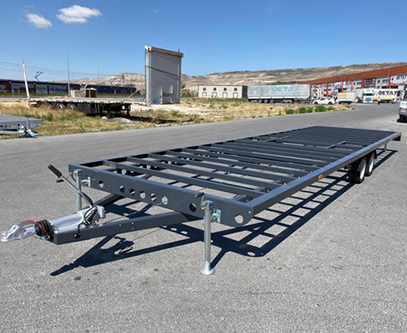
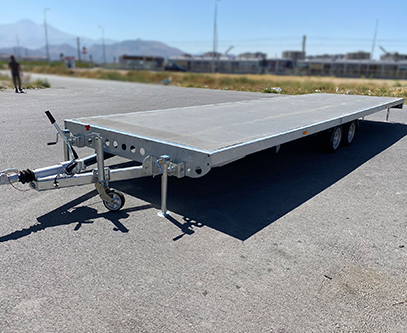
A trailer is an indispensable means of transport for transporting heavy and large loads. To ensure that a trailer can be used safely and efficiently, it is important to use the right parts. Below we discuss different types of trailer parts and what they can be used for.
1. Coupling and tow bar The coupling or tow bar is the part that attaches the trailer to the towing vehicle. There are different types of couplings and tow bars, depending on the type of trailer and the vehicle to which it is attached. A good coupling ensures a solid connection between the trailer and the towing vehicle, keeping the load stable while driving.
2. Overrun brake An overrun brake is a mechanical part that ensures that the trailer brakes when the towing vehicle brakes. This ensures safe and controlled deceleration while driving. An overrun brake is especially important when driving with heavy loads or on steep slopes.
3. Axles and wheels The axles and wheels form the basis of a trailer and are crucial for its stability and load-bearing capacity. The axles support the weight of the trailer and ensure that it stays firmly on the road. The wheels need good grip for driving and should be checked and maintained regularly.
4. Lighting Properly functioning lighting on the trailer is essential for safety on the road. This includes taillights, turn signals, brake lights and reflectors. It is important to check these regularly and replace them if necessary.
5. Loading box and closed side walls The loading box and closed side walls form the ‘body’ of the trailer and are especially important when transporting fragile loads or materials that should not get wet. They protect the load against weather influences and prevent it from falling off the trailer.
6. Ramps and ramps It can be useful to use ramps or ramps for transporting vehicles or machines. These ensure that the cargo can be easily loaded onto the trailer and transported safely.
7. Support legs Support legs are used to stabilize and support the trailer when it is disconnected from the tow vehicle. This is useful when loading and unloading heavy loads or when parking for a long time.
In addition, there are numerous other parts that are specifically used for certain types of trailers, such as extension boards, cargo nets and spare tires. It is important to always use the correct parts and to check and maintain them regularly for safe and efficient use of the trailer.

Please contact us
Book a consultation today
Ready for the next step? Book a consultation with Intermetal today and let us guide your project to success. Our experienced team listens to your ideas, provides expert advice and offers tailor-made solutions.
For private individuals and companies
We produce trailers for private and business use
Quick service
Intermetal can quickly produce your desired trailer
Professional team
Reliable and honest staff who work at a high level
Intermetal Trailers
An Intermetal trailer is the transport solution for every professional. Our trailers can handle any job. Intermetal trailers are frequently used in almost every sector. Think about:
- Residential and non-residential construction
- Road and waterworks
- Civil engineering
- Gardening sector
- Agriculture and horticulture
- Mobile sales
- Operation of market stalls
F.A.Q.
The length of a trailer depends on its purpose and the supplies you want to transport on it. In general, it is recommended to choose at least 1.5 times the length of the vehicle to which the trailer is connected. So, for example, if you have a car that is 4 meters long, a trailer of at least 6 meters is recommended. It is important to also take into account the maximum loading capacity of the trailer and the weight of the cargo you want to transport.
There are several types of materials suitable for trailers, including:
– Steel: this is a strong and durable material, but can be sensitive to rust.
– Aluminum: this is lightweight, rust-free and highly resistant to corrosion.
– Wood: this is a natural material that can withstand a blow and is relatively cheap.
– Polyethylene: this is a plastic that is lightweight, strong and water resistant.
– Fiberglass: this is also a lightweight and strong material that is highly resistant to corrosion and weather influences.
– Composite materials: these are materials that consist of different layers, for example fiberglass and plastic, and are very strong and lightweight.
This depends on the size and weight of the trailer, the terrain being driven on and the engine of the towing vehicle. In general, a power of at least 80% of the maximum power of the towing vehicle is assumed.
To choose the right tires for your trailer, you should take the following aspects into account:
1. Load Capacity – It is important to choose tires that have the correct load capacity for the weight of your trailer and cargo. This is expressed in kilograms and is usually stated on the side of the tire.
2. Size – The tires must be the correct size to fit the rims of your trailer. This size is shown in inches and consists of three numbers (for example 205/75 R14). The first number indicates the width of the tire, the second number the height/width ratio and the third number the rim diameter.
3. Tread – The tread of the tire is also important and should be suitable for the type of road surface you are driving on. For a trailer that is mainly used on the road, a normal profile is sufficient.
The loading capacity you should choose for your trailer depends on the amount of cargo you plan to transport. It is important to know the maximum weight your car can tow and to take into account any additional loads, such as passengers and luggage in the car itself. The loading capacity of the trailer must add to this. It is always better to choose a trailer with a higher loading capacity than you need so that you have flexibility and do not become overloaded.