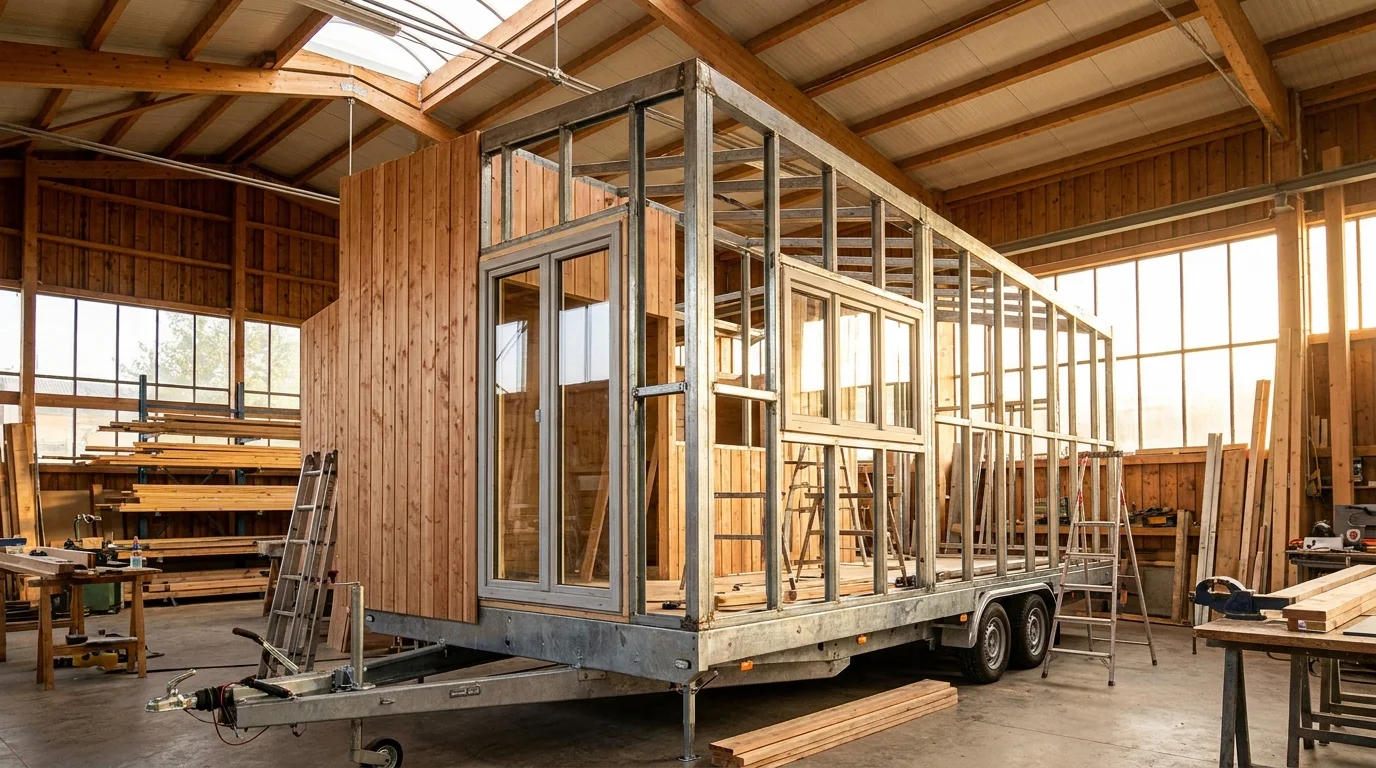
The chassis is literally the foundation of your tiny house. Everything you build on it, the floor, walls, roof, installations, stands or falls with the quality of that frame. Yet the chassis is often only taken seriously late in the build process. Here are the choices you'll want to make in advance.
1. Dimensions: which size fits your design?
Tiny house chassis are typically built in lengths of 6 to 10 metres. The right size depends on your design, the weight of the structure and how you intend to move the house. Think ahead about the total height and width including the structure, and check the current road transport requirements for your situation.
2. Load-bearing structure and weight
A tiny house can easily weigh several tonnes. The frame must carry that weight without deflection, both in the long term and during transport. Key points:
- Frame sections and crossbeams: their layout determines how the floor load is distributed.
- Axles and axle load: the number of axles must match the total weight of the house plus contents.
- Attachment points: a good chassis has well thought-out points for anchoring the structure.
3. Corrosion protection: protection for decades
A tiny house stands outside for years, exposed to wind and weather. The corrosion protection of the steel determines what the frame will look like in ten years. Discuss with your supplier which treatment suits your situation and budget, and ask how edges, weld seams and drilled holes are finished, since that is where corrosion starts first.
4. Custom work pays off
No two tiny houses are the same. A chassis made exactly to your design prevents fitting and construction problems during the build. Intermetal produces tiny house chassis entirely to your specifications, in-house, with seven metalworking operations under one roof, from laser cutting to robot welding. This guarantees the quality of every step.
Summary
- First determine design, weight and transport requirements, then choose the size (6-10 m).
- Pay attention to the load-bearing structure, axles and attachment points.
- Ask about corrosion protection and the finishing of weld seams.
- Choose custom work: a chassis built to specification prevents problems during the build phase.
A chassis to your specifications?
Send us your design or sketch, we're happy to think it through with you.